I wrote this while feeling unusually cranky:
The Chav
by Brit
Holding fast my grande coffee,
Past the Bookie, past the Offie,
Down the alley by the Tesco
(a most convenient al fresco
toilet for homecoming drunks,
A quiet place for blowing chunks
when caught short of a water closet,
And just the right spot to deposit,
Atop the teens’ cigarette stubs,
Pint glasses borrowed from the pubs),
'Twas here that I was forced to have
a tango with a Bristol chav:
Our paths were heading for collision,
We both were wracked by indecision,
We shuffled this way, feinted that,
But underneath his Burberry hat
no smile met mine to make it jokey,
This impromptu hokey-cokey,
No human touch, no recognition,
Just a joyless tunnel vision.
But it was even worse than that,
For as he muscled by, he spat,
And even muttered ‘fkng twt’.
A beady eye, a reptile’s glare,
A beastly eye, a thrush’s stare,
More coiled steel than life in there,
A raptor’s, rodent’s, robot’s face.
So tell me, is it commonplace,
In his anti-world, this anti-grace?
We share a common space, a town,
But seem to have no common ground,
Except the brutal geographic.
I turned to watch him dodge the traffic,
Weaving in and out the queue,
Hunched body language, ‘yeah f'kyou’.
So what unholy matrimony of nature/nuture spawned this boney
Monster with his gangling gait, his cultivated primate’s hate?
His greasy crew-cut, mockney drawl,
Is this man’s future:
Nasty, brutish, and tall?
Or should we blame his father?
But if his father, why not his father?
Or a thousand fathers farther
back? The chain must start somewhere.
It starts there.
After all,
Nobody took this thing
and forced him to wear all the bling,
Or made him start taxi rank fights,
Or made him smoke the Marlborough Lights,
Or made him scrawl ‘Go home Paki’,
Or made him wear the Kappa trackie
at all hours (not just in the gym).
So I don’t blame his father,
I blame him.
More poems here

Wednesday, September 13, 2006


Tuesday, September 12, 2006
Cashley versus reality
This one is just for ToE’s lurking Spurs-supporter:
Somewhere along the A406 North Circular Road, one telephone call changed everything about how I viewed and felt about Arsenal.
“Ash! Are you listening?” said a virtually hyperventilating Jonathan. “I’m here in the office and David Dein is saying they aren’t going to give you £60k a week. They’ve agreed £55k and this is their best and final offer. Are you happy with that?”
When I heard Jonathan repeat the figure of £55k, I nearly swerved off the road. “He is taking the piss, Jonathan!” I yelled down the phone. I was so incensed. I was trembling with anger. I couldn’t believe what I’d heard. I suppose it all started to fall apart for me from then on.
From Ashley Cole’s autobiography, published this week in The Times, and surely the most whingeing, snivelling, greedy, unpleasant piece of self-pitying but unself-aware garbage ever to disgrace humanity.
I could barely read it, and nor could James Lawton in The Independent , nor anyone at Football365.
Somewhere along the A406 North Circular Road, one telephone call changed everything about how I viewed and felt about Arsenal.
“Ash! Are you listening?” said a virtually hyperventilating Jonathan. “I’m here in the office and David Dein is saying they aren’t going to give you £60k a week. They’ve agreed £55k and this is their best and final offer. Are you happy with that?”
When I heard Jonathan repeat the figure of £55k, I nearly swerved off the road. “He is taking the piss, Jonathan!” I yelled down the phone. I was so incensed. I was trembling with anger. I couldn’t believe what I’d heard. I suppose it all started to fall apart for me from then on.
From Ashley Cole’s autobiography, published this week in The Times, and surely the most whingeing, snivelling, greedy, unpleasant piece of self-pitying but unself-aware garbage ever to disgrace humanity.
I could barely read it, and nor could James Lawton in The Independent , nor anyone at Football365.
Monday, September 11, 2006
The Age of Weariness
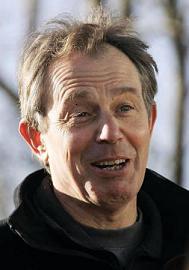
Any cousins across the Pond pondering possible reasons for their beloved Blair’s oh so Long Goodbye shouldn’t expend too many little grey cells on the matter, other than as an academic exercise. The details are debatable, the root cause is not: Tony is simply coming to the end of his term, and his government to the end of its tether.
Lord Acton’s observation about Absolute Power seems to have been absorbed into the Anglo psyche, and the Anglos won’t let anyone wield it for too long, however competent or revered or messianic or just deep-down decent he or she happens to be.
The President of the USA has an official shelf-life. The Prime Minister of the UK, who has far more or far less personal power than his American counterpart depending on how you look at it, does not. But the shelf-life is real nonetheless. Everyone knows it, including Blair. A drawback of the unwritten nature of the PM’s time limit is that the incumbent leader, addicted to absolute power, is tempted by the delusion that it is not there at all, and his or her exit will be accompanied by undignified kicking and screaming, mass reshuffles, resignations, sour grapes, backstabbing and disastrous Party civil wars. Great fun for the sharks of the press, who never waste a moment in publishing the inevitable Et Tu Brute? cartoons, but a dreadful bore for the general public.
And boredom is the heart of the matter. We’re tired of Tony. It’s nothing personal – for the most part, it’s not even his fault. As an international representative he’s been an eloquent, intelligent, reassuringly tall, and totally non-embarrassing figure. His domestic legacy is enormous: New Labour and the possibly irreversible monopoly of centre-ground tinkering over ideological politics.
But a decade is over-tiring. What’s more, the five years since those planes flew into the World Trade Center have been especially exhausting. If anything, given our ever-decreasing attention span cycles, it is to his credit (and the pre-Cameron Conservatives’ debit) that he’s held on so long.
On 12 September 2001, an age ago, we were all Americans – hard as that is to imagine now. It must have seemed impossible for any President to fritter away that heap of international sympathy and goodwill. It must have seemed impossible for the West’s left and right not to be fused in one united front. They were for a while, but that wave of unity, which just about carried over Afganistan (even the Left could see the logic in wiping out Osama’s protectors), took no time in breaking on the rock of Iraq.
Iraq knackered us. Cracked us down the middle. Blair got stretched thin between the UN and the US, attempting to appease the Euro appeasers while buddying up to Dubya. We got tired of Blair being Shoulder to Shoulder with Bush but the Voice of Reason in Europe. Blair got very, very tired of debating every step of the issue with BBC interviewers and studio audiences consisting, almost exclusively it seemed, of Guardian-reading politics undergraduates – an irritating circus made unavoidable by the trumpeting of democracy as a chief justification for the invasion (‘I think you’re wrong, but remember that if you were Iraqi you would not be allowed to disagree with your Government’). This was the Dawning of the Age of Weariness.
Then came the Confederacy of Dunces and the million marching in London, led by Red Ken, Gorgeous George, the Nobel-winning (!) Harold Pinter, Michael Moore and the usual semi-literate, wholly-hubristic pop musicians.
So varied and illogical and self-contradictory were the complaints, so moronic the oil conspiracies and the Saddam-apologising and the BusHitler rhetoric, the irrelevant stacked endlessly on top of the nonsensical like Pelion on Ossa, that the great Leftist coalition could only appal the rational.
But here was a big problem: how can you agree with some of the scattergun complaints (that the Allies were courting disaster by failing to create any kind of clear plan for post-war Iraq, or that Bush’s crass cowboy utterances could only alienate natural allies), without appearing to be on the same side as the Dunces? Iraq split us into two, sometimes unnaturally, meaning that old British lefties ended up on the right (Hitchens; McEwan; Amis) and old British righties on the left (Matthew Parris; Simon Hughes of the Times, who defected to the Guardian). The brick wall was hit, and afterwards it was just two grimacing faces grinding against its opposite sides, with no hopes of comfortably sitting astride it.
Abu Graib, Guantanamo, faked photos of British squaddies ‘abusing’ prisoners, Madrid, London July 7, ‘quagmires’, airport security, Prophet cartoons – they’ve all worn us to the bone.
Above all, Blair has become too synonymous with Bush, and the world is weary of them both. Surely even the patriotic, anti-Dunce American right will heave a secret sigh of relief when Bush is replaced and skirmishes can begin anew, just as even the staunchest New Labour supporters will when the Blair finally goes. The hatred of half the world has become so crushingly focused on the person of George W Bush. Remove the focus and you shift the battle lines. It will be a soft, superficial, temporary relief, like finding the cool part of the pillow in a bed-ridden fever. But a relief nonetheless. Fighting the same battles over and over every day since 2001 has set us firmly in the Age of Weariness.
The British political system means that we elect a benign dictatorship every ten years or so. We let them have a glorious honeymoon period of reform for a few years, then we gradually reduce their power over a few elections. Finally, we punish them for their longevity by utterly routing them at the ballot box and putting a new benign dictatorship in place.
Few parties have been so defined by their leader as New Labour has been by Blair. But we are tired of Blair, and of arguing about Blair. We've said everything we wanted to say, and quite a bit that we didn't. Now we want new battles, new battle-lines, new angles, new dinner-table topics and a new honeymoon to wake us up. Cameron will only have himself to blame if he blows it now.
Friday, September 08, 2006
No goats

A Swiss man caught speeding on a Canadian highway has blamed his actions on the absence of goats on the roads.
The man was caught driving at 161 km/h (100mph) in a 100 km/h (60mph) zone.
A traffic officer's notes said the Swiss driver had said he was taking advantage "of the ability to go faster without risking hitting a goat".
Canadian police spokesman Joel Doiron said he had never found a goat on the highways of eastern Ontario in his 20 years of service.
"Nobody's ever used the lack of goats here as an excuse for speeding," Mr Doiron told the AFP news agency.
Brilliant! From now on, whenever I am rumbled in some act of mischief or negligence, I shall simply blame it on the ‘lack of goats’.
Wednesday, September 06, 2006
Raight hyped Monkeys
They always say policemen are getting younger, but not as quickly as rock bands. Those wee scamps the Arctic Monkeys, who picked up the Mercury Music Prize last night, looked about 12.
New British guitar bands are notoriously over-hyped, but since indie rock is perhaps the only art form in which Britain still leads the world (apart from costume dramas, stand-up comedy and TV shows about people redecorating their homes) this is sort of understandable.
And for a change the Arctic Monkeys do go some way towards justifying the hype. Mainly because the words are very funny, nailing the Saturday night townie culture of Britain’s city centres perfectly.
As exemplified by the drunken, strongly Sheffield-accented, post-club taxi-home chatter of their best song Red Light Indicates Doors Are Secured:
Ask if we can have six in, if not we'll have to have two
You're coming up our end aren't you? So I'll get one with you
Oh won't he let us have six in? Especially not with the food
He coulda just told us no though, he dint have to be rude
See her in the green dress? She talked to me at the bar
How come its already two pound fifty? We've only gone about a yard
Dint ya see she were gorgeous, she was beyond belief
But this lad at the side drinking a Smirnoff Ice came and paid for her Tropical Reef
And I'm sitting going backwards, and I didn't want to leave
Its High Green, mate, via Hillsborough please
How funny was that sketch earlier, up near that taxi rank
Oh no you will have missed it, think it was when you went to the bank
These two lads squaring up proper shouting, bout who was next in the queue
The kind of thing that would seem so silly but not when they've both had a few
Calm down, temper temper, you shouldn’t get so annoyed
You’re acting like a silly little boy
They wanted to be men and do some fighting in the street
No surrender, no chance of retreat!
Drunken plots hatched to jump it, ask around are ya sure?
Went for it but the red light was showing
And the red light indicates doors are secured.
As a public service, and given the quantity of slang in the song, I have provided a translation:
(To friend, who is engaged in hailing taxi cab):
Pray ask the good driver if his taxi cab will accommodate six passengers, for if not we will be obliged to commandeer an additional transport,
Now I understand that your destination is in the proximity of my residence, in which case you and I can share this additional taxi, thus halving the cost.
Oh, he refuses to accommodate six passengers, being especially fearful that our takeaway meals will spoil his upholstery?
A simple ‘no’ would have sufficed: the abruptness of his reply was uncalled-for.
(To friend, now ensconced in taxi cab):
Observe the lady attired in green: we engaged in conversation at the bar of the night-club we have recently exited….
(To taxi driver, interrupting self): Excuse me sir, I am concerned by the rapidity with which your meter is advancing – we have not travelled far, yet already it reads £2.50.
(To friend): …The aforementioned lady was, I’m sure you’ll agree, highly attractive, but sadly my plan to entice her into a more intimate conversation was thwarted by the arrival of a rival for her affections, who paid the bill for her sugary alcoholic beverage.
(Interior monologue): Now, as I contemplate the rear window of this taxi, it occurs to me that I would prefer to have remained in that nightclub.
(To taxi driver): Our final destination is High Green, but please proceed via the district of Hillsborough.
(To friend): Did you observe the highly amusing incident that occurred in the queue for the taxi-cabs
Or perhaps it took place when you left to withdraw money from an ATM machine?
Anyway, the crux of it was that two fellows became embroiled in a dispute about who had the prior claim to the first taxi to arrive at the rank,
A dispute unfortunately fuelled by the effects of intoxicating liquor.
They were behaving in an unwise and immature manner, and would have been well-advised to becalm themselves,
But sadly a misguided bravado and machismo overruled reasonableness,
And they vowed, in the oft-used words of the British response to threats from the Irish Republican Army, that neither retreat nor surrender were ‘on the cards’, so to speak.
(Interior monologue): In situations of this kind, groups of intoxicated young men often in their impatience hatch ill-thought out and unlikely plots to ‘hijack’ taxis occupied by other passengers,
Fortunately, the internal locking mechanisms on taxi doors, commonly indicated as being operational by the illumination of a red light, are sufficiently sophisticated to minimise the risk of such an attempt being successful.
New British guitar bands are notoriously over-hyped, but since indie rock is perhaps the only art form in which Britain still leads the world (apart from costume dramas, stand-up comedy and TV shows about people redecorating their homes) this is sort of understandable.
And for a change the Arctic Monkeys do go some way towards justifying the hype. Mainly because the words are very funny, nailing the Saturday night townie culture of Britain’s city centres perfectly.
As exemplified by the drunken, strongly Sheffield-accented, post-club taxi-home chatter of their best song Red Light Indicates Doors Are Secured:
Ask if we can have six in, if not we'll have to have two
You're coming up our end aren't you? So I'll get one with you
Oh won't he let us have six in? Especially not with the food
He coulda just told us no though, he dint have to be rude
See her in the green dress? She talked to me at the bar
How come its already two pound fifty? We've only gone about a yard
Dint ya see she were gorgeous, she was beyond belief
But this lad at the side drinking a Smirnoff Ice came and paid for her Tropical Reef
And I'm sitting going backwards, and I didn't want to leave
Its High Green, mate, via Hillsborough please
How funny was that sketch earlier, up near that taxi rank
Oh no you will have missed it, think it was when you went to the bank
These two lads squaring up proper shouting, bout who was next in the queue
The kind of thing that would seem so silly but not when they've both had a few
Calm down, temper temper, you shouldn’t get so annoyed
You’re acting like a silly little boy
They wanted to be men and do some fighting in the street
No surrender, no chance of retreat!
Drunken plots hatched to jump it, ask around are ya sure?
Went for it but the red light was showing
And the red light indicates doors are secured.
As a public service, and given the quantity of slang in the song, I have provided a translation:
(To friend, who is engaged in hailing taxi cab):
Pray ask the good driver if his taxi cab will accommodate six passengers, for if not we will be obliged to commandeer an additional transport,
Now I understand that your destination is in the proximity of my residence, in which case you and I can share this additional taxi, thus halving the cost.
Oh, he refuses to accommodate six passengers, being especially fearful that our takeaway meals will spoil his upholstery?
A simple ‘no’ would have sufficed: the abruptness of his reply was uncalled-for.
(To friend, now ensconced in taxi cab):
Observe the lady attired in green: we engaged in conversation at the bar of the night-club we have recently exited….
(To taxi driver, interrupting self): Excuse me sir, I am concerned by the rapidity with which your meter is advancing – we have not travelled far, yet already it reads £2.50.
(To friend): …The aforementioned lady was, I’m sure you’ll agree, highly attractive, but sadly my plan to entice her into a more intimate conversation was thwarted by the arrival of a rival for her affections, who paid the bill for her sugary alcoholic beverage.
(Interior monologue): Now, as I contemplate the rear window of this taxi, it occurs to me that I would prefer to have remained in that nightclub.
(To taxi driver): Our final destination is High Green, but please proceed via the district of Hillsborough.
(To friend): Did you observe the highly amusing incident that occurred in the queue for the taxi-cabs
Or perhaps it took place when you left to withdraw money from an ATM machine?
Anyway, the crux of it was that two fellows became embroiled in a dispute about who had the prior claim to the first taxi to arrive at the rank,
A dispute unfortunately fuelled by the effects of intoxicating liquor.
They were behaving in an unwise and immature manner, and would have been well-advised to becalm themselves,
But sadly a misguided bravado and machismo overruled reasonableness,
And they vowed, in the oft-used words of the British response to threats from the Irish Republican Army, that neither retreat nor surrender were ‘on the cards’, so to speak.
(Interior monologue): In situations of this kind, groups of intoxicated young men often in their impatience hatch ill-thought out and unlikely plots to ‘hijack’ taxis occupied by other passengers,
Fortunately, the internal locking mechanisms on taxi doors, commonly indicated as being operational by the illumination of a red light, are sufficiently sophisticated to minimise the risk of such an attempt being successful.
Monday, September 04, 2006
Steve Irwin: RIP, mate

From the BBC
Australian environmentalist and television personality Steve Irwin has died during a diving accident.
Mr Irwin, 44, was killed by a stingray barb to the chest while he was filming an underwater documentary in Queensland's Great Barrier Reef.
I find this news depresses me more than I might have expected, and I have no appetite for the obvious snide one-liners.
Irwin was a wonderful character: the personification of everything I love about Australia – our tearaway younger brothers.
More than that: he had an air of indestructibility about him, which, like far too many things for my liking, turned out to be an illusion.
Friday, September 01, 2006
My new hero
From Ananova:
A cricketer carried on batting after suffering a heart attack at the crease.
Jim Young, 57, scored another 12 for his village team despite crushing chest pains, reports the Mirror.
He collapsed to his knees and was taken off but went back after a glass of water and scored another four to end up on 48 not out. After the match a team-mate took him to the ambulance station and he was sent straight to hospital.
Jim was playing for Westmill, near Buntingford, Herts, against a Bishop's Stortford side.
Captain Martin Jones said: "Jim is passionate about cricket and Westmill. It was an important match and he played so well. It was a shame we lost."
You can virtually hear Elgar’s Nimrod swelling in the background
A cricketer carried on batting after suffering a heart attack at the crease.
Jim Young, 57, scored another 12 for his village team despite crushing chest pains, reports the Mirror.
He collapsed to his knees and was taken off but went back after a glass of water and scored another four to end up on 48 not out. After the match a team-mate took him to the ambulance station and he was sent straight to hospital.
Jim was playing for Westmill, near Buntingford, Herts, against a Bishop's Stortford side.
Captain Martin Jones said: "Jim is passionate about cricket and Westmill. It was an important match and he played so well. It was a shame we lost."
You can virtually hear Elgar’s Nimrod swelling in the background
Thursday, August 31, 2006
Be careful what you wish for, Scotland
Boris Johnson writes a gloriously provocative piece in today’s Telegraph:
As anyone will know who has witnessed the death of a relative from multiple myeloma, it can be a grim way to go. Your very marrow is in revolt, as the cancer takes over the blood-making processes.
Since it could happen to any of us, I hope you will concentrate for a second on the case of a constituent of mine, a distinguished and charming author. When I last met him, he was running the second-hand book stall at the fête, and seemed very cheerful. I did not know it, but he was already well down the track that begins with radiography and then goes on to chemotherapy and stem-cell transplants, and then to courses of melphalan and steroids.
Now he has come to the last drug in humanity's current pharmacopoeia. It is called Velcade, and it is a good drug, fully licensed in this country. His doctors have told him that it would improve the quality of his life, and perhaps prolong it by two to five years.
It is available free in the healthcare systems of virtually every other European country; and yet he cannot get it in Oxfordshire. It is not available to him, or anyone else, on the Oxfordshire NHS.
He says, rather mildly, that he feels this is "unjust". I think that is an understatement. It happens that Oxfordshire is one of those counties particularly penalised by Labour, in that our per capita healthcare funding is only about 85 per cent of the national average. It is true — though obviously grossly unfair — that there are some primary care trusts (PCTs) in England that do feel rich enough to be able to afford Velcade, and today it is still being given to many multiple myeloma sufferers in other English counties.
And yet, in just a few days' time, the position is about to become worse. The injustice will shortly become an outrage. On September 6, the National Institute for Clinical Excellence (Nice) is expected finally to rule, or "advise", that Velcade should not be dispensed on the NHS, with chaotic consequences for those English PCTs that are still giving it out.
And why is it being stopped? Because each course of treatment costs between £16,000 and £17,000. We must accept, in this country, that there are some treatments the state just cannot afford, and Nice will shortly rule that Velcade is not cost-effective.
Did I say "this country"? Forgive me. There will certainly be one part of Britain, if not England, where the NHS will continue to distribute Velcade, free, to sufferers from multiple myeloma. The drug will be available in Scotland, as it has been for some time; and, much as I love the Scots, it makes my blood boil that they should be so preferred.
Do you remember that deathless moment when a heroic Labour backbencher ambushed Tony Blair at Prime Minister's Questions, and asked him to describe his core political beliefs? The PM went white, and stammered, and, after a hilarious hiatus, he gargled, "Errr … the NHS", and flopped back in his seat. And when Gordon Brown, his heir-presumptive, is struggling to sum up the "spirit of Britishness", the thing that really unites the country, he always goes for the "unique values of the NHS".
In a way, he is right. The NHS is an essential half of the symmetry of British politics. In property and economics, we may be more inegalitarian than some other European societies; but we compensate at the moments of birth, sickness and death with the total equality of the NHS ward.
So let me ask you this, Gordon: how can you call it a National Health Service? I mean, run that National bit past me again. Which nation are we talking about here? There are two nations, and England gets £1,085 per capita health spending and no Velcade, while Scotland gets £1,262 per capita and free Velcade for Scottish multiple myeloma sufferers, among many other benefits.
Gentlemen of England now abed, here is the position. The Scots have free nursing care for the elderly — subsidised, under the Barnett formula, by us, the English — while we cannot afford it in England. The Scots have the luxury of refusing to charge their students top-up fees — since they are subsidised by us, the English — while English students have to cough up. Now we learn that the Scots have free cancer drugs — subsidised by us, the English — while we in England are told they are not cost-effective.
And all this injustice is provoked by a fundamental constitutional imbalance. It was because of devolution that the Scottish equivalent of Nice was able to decide that it no longer needed to obey the rulings of this so-called "National" body. It is because of devolution that Scots are able to make their own health arrangements, in the comfortable knowledge that Whitehall will bung them an extra couple of hundred quid for every Scot.
It is because of devolution that the numerous Scottish MPs, with their small constituencies, are able to vote on questions that affect England, while English MPs have no corresponding say over healthcare in Scotland. [...]
Scottish devolution … has smashed its Mel Gibson broadsword through the NHS.
There's no more NHS. There's an EHS and an SHS. This is no longer some abstract constitutional issue. This is life and death. Unless Labour sorts it out, the shires of England will not be asking for devolution, but revolution, and they will be right.
(read the rest here)
Hey, but the Scots have their legitimate grievances too: after all, the BBC commentators are really biased towards the England football team!
As anyone will know who has witnessed the death of a relative from multiple myeloma, it can be a grim way to go. Your very marrow is in revolt, as the cancer takes over the blood-making processes.
Since it could happen to any of us, I hope you will concentrate for a second on the case of a constituent of mine, a distinguished and charming author. When I last met him, he was running the second-hand book stall at the fête, and seemed very cheerful. I did not know it, but he was already well down the track that begins with radiography and then goes on to chemotherapy and stem-cell transplants, and then to courses of melphalan and steroids.
Now he has come to the last drug in humanity's current pharmacopoeia. It is called Velcade, and it is a good drug, fully licensed in this country. His doctors have told him that it would improve the quality of his life, and perhaps prolong it by two to five years.
It is available free in the healthcare systems of virtually every other European country; and yet he cannot get it in Oxfordshire. It is not available to him, or anyone else, on the Oxfordshire NHS.
He says, rather mildly, that he feels this is "unjust". I think that is an understatement. It happens that Oxfordshire is one of those counties particularly penalised by Labour, in that our per capita healthcare funding is only about 85 per cent of the national average. It is true — though obviously grossly unfair — that there are some primary care trusts (PCTs) in England that do feel rich enough to be able to afford Velcade, and today it is still being given to many multiple myeloma sufferers in other English counties.
And yet, in just a few days' time, the position is about to become worse. The injustice will shortly become an outrage. On September 6, the National Institute for Clinical Excellence (Nice) is expected finally to rule, or "advise", that Velcade should not be dispensed on the NHS, with chaotic consequences for those English PCTs that are still giving it out.
And why is it being stopped? Because each course of treatment costs between £16,000 and £17,000. We must accept, in this country, that there are some treatments the state just cannot afford, and Nice will shortly rule that Velcade is not cost-effective.
Did I say "this country"? Forgive me. There will certainly be one part of Britain, if not England, where the NHS will continue to distribute Velcade, free, to sufferers from multiple myeloma. The drug will be available in Scotland, as it has been for some time; and, much as I love the Scots, it makes my blood boil that they should be so preferred.
Do you remember that deathless moment when a heroic Labour backbencher ambushed Tony Blair at Prime Minister's Questions, and asked him to describe his core political beliefs? The PM went white, and stammered, and, after a hilarious hiatus, he gargled, "Errr … the NHS", and flopped back in his seat. And when Gordon Brown, his heir-presumptive, is struggling to sum up the "spirit of Britishness", the thing that really unites the country, he always goes for the "unique values of the NHS".
In a way, he is right. The NHS is an essential half of the symmetry of British politics. In property and economics, we may be more inegalitarian than some other European societies; but we compensate at the moments of birth, sickness and death with the total equality of the NHS ward.
So let me ask you this, Gordon: how can you call it a National Health Service? I mean, run that National bit past me again. Which nation are we talking about here? There are two nations, and England gets £1,085 per capita health spending and no Velcade, while Scotland gets £1,262 per capita and free Velcade for Scottish multiple myeloma sufferers, among many other benefits.
Gentlemen of England now abed, here is the position. The Scots have free nursing care for the elderly — subsidised, under the Barnett formula, by us, the English — while we cannot afford it in England. The Scots have the luxury of refusing to charge their students top-up fees — since they are subsidised by us, the English — while English students have to cough up. Now we learn that the Scots have free cancer drugs — subsidised by us, the English — while we in England are told they are not cost-effective.
And all this injustice is provoked by a fundamental constitutional imbalance. It was because of devolution that the Scottish equivalent of Nice was able to decide that it no longer needed to obey the rulings of this so-called "National" body. It is because of devolution that Scots are able to make their own health arrangements, in the comfortable knowledge that Whitehall will bung them an extra couple of hundred quid for every Scot.
It is because of devolution that the numerous Scottish MPs, with their small constituencies, are able to vote on questions that affect England, while English MPs have no corresponding say over healthcare in Scotland. [...]
Scottish devolution … has smashed its Mel Gibson broadsword through the NHS.
There's no more NHS. There's an EHS and an SHS. This is no longer some abstract constitutional issue. This is life and death. Unless Labour sorts it out, the shires of England will not be asking for devolution, but revolution, and they will be right.
(read the rest here)
Hey, but the Scots have their legitimate grievances too: after all, the BBC commentators are really biased towards the England football team!
Wednesday, August 30, 2006
I hope you forl orff yoor hoorse
From the Grauniad:
Zara Phillips' gold-medal winning performance at the equestrian world championships has seen the former wild child hailed as a sporting hero - just like her mother was, 35 years ago. But is she really a major talent, or just a toff with lots of cash and a great horse? Stephen Moss reports
It may be something to do with the BBC's desperate search for a sports personality of the year, but we seem to be witnessing some startling sporting transformations of late. First David Walliams goes from fleshy, decadent comedian to courageous swimmer in the course of one remarkable Channel crossing; then Monty Panesar changes, virtually overnight, from bearded joker to world-class spinner; and now Zara Phillips, daughter of Princess Anne and 11th in line to the throne, has been alchemised from party-loving royal to equestrian superstar by adding the three-day event world championship to the European championship she won last year.
Admittedly, there are still a few doubters. "Oh, you're not doing another piece about Zara Phillips," one of the Guardian's sports staff said to me yesterday. "Eventing is not even a sport; it's like sheep dog trials." Phillips is a toff who has done well in an outrageously expensive and exclusive pseudo-sport run by and for toffs, is the subtext...
...At the heart of this is the fact that Britain has an odd relationship with equestrianism: we are very good at it, but it gets grudging coverage in the media. Phillips, who is 25, might be the start of a rise in profile for the sport, or she might be such a one-off that she will continue to be presented almost independently of it - a model in a hard hat.
Yet eventing is compelling. It combines three phases: dressage, a sort of equine ballet in which, through a series of precise movements, the rider has to demonstrate a perfect union with the horse; the TV-friendly cross-country - on a course about as long as the Grand National but even more difficult and dangerous to ride because the fences are solid and grouped in fiendish combinations - and, finally, show jumping, in which, again, control is the key.
I find it very hard to think of something as a ‘sport’ if it is marked on aesthetic merit by judges.
Zara Phillips' gold-medal winning performance at the equestrian world championships has seen the former wild child hailed as a sporting hero - just like her mother was, 35 years ago. But is she really a major talent, or just a toff with lots of cash and a great horse? Stephen Moss reports
It may be something to do with the BBC's desperate search for a sports personality of the year, but we seem to be witnessing some startling sporting transformations of late. First David Walliams goes from fleshy, decadent comedian to courageous swimmer in the course of one remarkable Channel crossing; then Monty Panesar changes, virtually overnight, from bearded joker to world-class spinner; and now Zara Phillips, daughter of Princess Anne and 11th in line to the throne, has been alchemised from party-loving royal to equestrian superstar by adding the three-day event world championship to the European championship she won last year.
Admittedly, there are still a few doubters. "Oh, you're not doing another piece about Zara Phillips," one of the Guardian's sports staff said to me yesterday. "Eventing is not even a sport; it's like sheep dog trials." Phillips is a toff who has done well in an outrageously expensive and exclusive pseudo-sport run by and for toffs, is the subtext...
(and indeed, the text - Ed)
...At the heart of this is the fact that Britain has an odd relationship with equestrianism: we are very good at it, but it gets grudging coverage in the media. Phillips, who is 25, might be the start of a rise in profile for the sport, or she might be such a one-off that she will continue to be presented almost independently of it - a model in a hard hat.
Yet eventing is compelling. It combines three phases: dressage, a sort of equine ballet in which, through a series of precise movements, the rider has to demonstrate a perfect union with the horse; the TV-friendly cross-country - on a course about as long as the Grand National but even more difficult and dangerous to ride because the fences are solid and grouped in fiendish combinations - and, finally, show jumping, in which, again, control is the key.
I find it very hard to think of something as a ‘sport’ if it is marked on aesthetic merit by judges.
Wednesday, August 23, 2006
Tiddley om pom pom
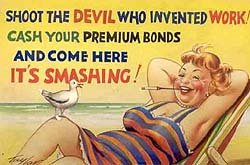
Says the BBC:
Come the bank holiday, millions will head abroad or to the countryside. But what of the UK's seaside resorts? After years in the shade, they're making a comeback.
Ah, the smell of fish and chips, the squawk of seagulls and the splash of bracing briney waves. Few childhood memories are as evocative as that of the British seaside holiday, which holds a unique place in the national psyche.
Yet while domestic tourism is in rude health - with walking, camping and caravanning enjoying a revival - and flights to the Mediterranean cheaper than an inter-city train fare, bucket-and-spade breaks seem to have been left behind.
For 30 years there have been repeated predictions that the British seaside holiday is doomed. MPs are currently investigating what action can be taken to save coastal towns gripped by deprivation.
But are there stirrings that the UK's love affair with the seaside may be rekindled?
Traditional English seaside holidays only 'went away' in the sense that they moved to the Algarve, Spain, Greece, the Canaries, the Balearics etc. Dotted all over the Med are Little Britain enclaves, with English pubs, bingo, full breakfasts, and TV screens endlessly running Only Fools and Horses, Dad's Army and Fawlty Towers.
If only global warming could guarantee us decent weather for just July and August, then Margate and Scunthorpe would be as popular as they were in the 1950s.
Monday, August 21, 2006
And just as we were recovering from the devastating pandemic of bird flu…
Mother gives rabbit flu warning
The mother of a man believed to be Britain's first victim of rabbit flu has issued a warning about the potentially fatal disease.
Farmer John Freeman, 29, of Aspall near Stowmarket in Suffolk, became infected with the bacteria pasteurella multocida after picking up a rabbit on his farm.
Now that the two-week heatwave has passed and we’re back to grey skies and drizzle, our papers have also forgotton about global warming.
The mother of a man believed to be Britain's first victim of rabbit flu has issued a warning about the potentially fatal disease.
Farmer John Freeman, 29, of Aspall near Stowmarket in Suffolk, became infected with the bacteria pasteurella multocida after picking up a rabbit on his farm.
Now that the two-week heatwave has passed and we’re back to grey skies and drizzle, our papers have also forgotton about global warming.
Friday, August 18, 2006
My shout
From the BBC:
Buying drinks in rounds can damage your health, says the Scottish Executive. But the round is about much more than drinking, it's a complex social activity that keeps the peace.
Getting a round in is a social minefield, with elaborate unwritten rules and punishments for anyone who gets it wrong.
The custom of buying drinks in rounds has been criticised by the Scottish Executive, with a health minister warning that it can pressurise people into drinking too much.
But Dr Peter Marsh, the co-director of the Social Issues Research Centre, says that below the surface the pub round is a complicated, highly-regulated social ritual.
Being in a round means being accepted as a member of a group. And once inside this group, there are rules to be carefully observed about when and how often drinkers should be heading to the bar.
"Buying a round in a pub marks you out as a member of a very specific group - and by watching who buys drinks for whom, and in turn who receives drinks from whom, you get an immediate idea of the social dynamic there," says Dr Marsh.
There is nothing random about how drinks are bought in a round.
“There's a lot of monitoring - because you don't want to buy the drinks too early, you don't want to buy them too late. There are unwritten rules, such as if half the round are towards the bottom of the glass, that's the time to buy," he says.
The greatest social danger is to be labelled as a round dodger who never finds their pocket - on the surface everyone might be smiling, but they're keeping a careful note on the progress of the round. People who don't buy their rounds become ostracised or pushed to the fringes of the group, it makes them extremely unpopular. It's seen as a deviant behaviour not to reciprocate.
"It goes the other way too, as people who buy too many are equally unpopular, as it's seen as showing off," says Dr Marsh.
If it was just about buying drinks, we would be more like the tourists arriving at a pub who all buy themselves an individual drink, says Dr Marsh. The round-buying is a more subtle piece of psychology….
I don’t know if the round-buying culture is entirely unique to Britain, but, like the business of drinking whilst standing up, I’ve not seen it replicated elsewhere as most places favour the tab and final bill method.
For the outsider, being taken out for a drink in Britain must be a social minefield. It’s hard enough for insiders.
For example, when the group is large enough to cross the critical threshold – ie. so large that it is obvious that even at British rates of drinking you’ll never get all the way round so that the first person to buy for everyone will in turn have one drink bought for him by everyone – then there results an delicate shifting and sifting into sub-groups, decided by such factors as closeness of blood relation and length of friendship, approximate rate of consumption, unfinished conversations, balance of designated drivers and intended flirtations.
The matter becomes yet more difficult where one ‘owes’ somebody in the group a drink. It is customary in Britain to dismiss all offers of recompense for any smallish favour with the phrase ‘just buy me a pint sometime’. And then there are those occasions where a friend might have bought you a solitary lunchtime drink and you are now obliged to buy him one back. British men can’t remember birthdays, but they have photographic memories about the people to whom they owe pints, and it is quite common for someone to reciprocate on a pint several years after the initial favour.
Add to this mix the complexities of financial factors: it is understood that poor students, OAPs, or younger siblings should not usually have to stump up for gigantic rounds, while the pressure is on alpha males to buy the early rounds, since they are generally more expensive, as people drop off through the evening, or switch to halves or orange juices (although since designer soft drinks have become as expensive as booze, the teetotaler card doesn’t carry the weight it once did.)
All of these subtle calculations are unspoken but, strangely, are universally understood.
Buying drinks in rounds can damage your health, says the Scottish Executive. But the round is about much more than drinking, it's a complex social activity that keeps the peace.
Getting a round in is a social minefield, with elaborate unwritten rules and punishments for anyone who gets it wrong.
The custom of buying drinks in rounds has been criticised by the Scottish Executive, with a health minister warning that it can pressurise people into drinking too much.
But Dr Peter Marsh, the co-director of the Social Issues Research Centre, says that below the surface the pub round is a complicated, highly-regulated social ritual.
Being in a round means being accepted as a member of a group. And once inside this group, there are rules to be carefully observed about when and how often drinkers should be heading to the bar.
"Buying a round in a pub marks you out as a member of a very specific group - and by watching who buys drinks for whom, and in turn who receives drinks from whom, you get an immediate idea of the social dynamic there," says Dr Marsh.
There is nothing random about how drinks are bought in a round.
“There's a lot of monitoring - because you don't want to buy the drinks too early, you don't want to buy them too late. There are unwritten rules, such as if half the round are towards the bottom of the glass, that's the time to buy," he says.
The greatest social danger is to be labelled as a round dodger who never finds their pocket - on the surface everyone might be smiling, but they're keeping a careful note on the progress of the round. People who don't buy their rounds become ostracised or pushed to the fringes of the group, it makes them extremely unpopular. It's seen as a deviant behaviour not to reciprocate.
"It goes the other way too, as people who buy too many are equally unpopular, as it's seen as showing off," says Dr Marsh.
If it was just about buying drinks, we would be more like the tourists arriving at a pub who all buy themselves an individual drink, says Dr Marsh. The round-buying is a more subtle piece of psychology….
I don’t know if the round-buying culture is entirely unique to Britain, but, like the business of drinking whilst standing up, I’ve not seen it replicated elsewhere as most places favour the tab and final bill method.
For the outsider, being taken out for a drink in Britain must be a social minefield. It’s hard enough for insiders.
For example, when the group is large enough to cross the critical threshold – ie. so large that it is obvious that even at British rates of drinking you’ll never get all the way round so that the first person to buy for everyone will in turn have one drink bought for him by everyone – then there results an delicate shifting and sifting into sub-groups, decided by such factors as closeness of blood relation and length of friendship, approximate rate of consumption, unfinished conversations, balance of designated drivers and intended flirtations.
The matter becomes yet more difficult where one ‘owes’ somebody in the group a drink. It is customary in Britain to dismiss all offers of recompense for any smallish favour with the phrase ‘just buy me a pint sometime’. And then there are those occasions where a friend might have bought you a solitary lunchtime drink and you are now obliged to buy him one back. British men can’t remember birthdays, but they have photographic memories about the people to whom they owe pints, and it is quite common for someone to reciprocate on a pint several years after the initial favour.
Add to this mix the complexities of financial factors: it is understood that poor students, OAPs, or younger siblings should not usually have to stump up for gigantic rounds, while the pressure is on alpha males to buy the early rounds, since they are generally more expensive, as people drop off through the evening, or switch to halves or orange juices (although since designer soft drinks have become as expensive as booze, the teetotaler card doesn’t carry the weight it once did.)
All of these subtle calculations are unspoken but, strangely, are universally understood.
Nine and no more
If you ever wanted to see how an incestuous series of blogs can rapidly promulgate a nonsensical meme (and I’m sure that’s an ambition nurtured by most of the populace), here’s a good example.
On the Daily Duck I posted an article decrying the International Astronomers Union’s craven decision to save Pluto’s status as a planet by allowing in all sorts of riff-raff, including some chav of a lump of rock named after a TV show about a Warrior Princess. (And if you think the G8 is pompous enough, they’ve got nothing on the IAU for self-proclaimed importance: these guys meet up to decide the fate of whole galaxies).
This sparked an arcane debate about the definitions of planets and moons, which was picked up on by Susan’s Husband in the comments thread, and subsequently by AOG at Thought Mesh, both of whom introduced a level of technicality far beyond my comprehension.
Fortunately, David on his new Secret Blog proposed an excellent solution: if we upgrade the Moon to planet status, via Isaac Asimov’s Double Planet theory, we can ditch Pluto and all these other piddling pretenders, and keep the numbers in the solar system to a traditional and elite nine: Mercury, Venus, Earth, the Moon, Mars, Jupiter, Saturn, Neptune and Uranus.
Henceforward you can do your bit for the Keep the Planets to Nine Campaign by always referring to the Moon as a planet in conversation, and I will take care of the highbrow element by lobbying for Clare de Lune by Debussy to be inserted into Holst’s Planets Suite for all future performances.
On the Daily Duck I posted an article decrying the International Astronomers Union’s craven decision to save Pluto’s status as a planet by allowing in all sorts of riff-raff, including some chav of a lump of rock named after a TV show about a Warrior Princess. (And if you think the G8 is pompous enough, they’ve got nothing on the IAU for self-proclaimed importance: these guys meet up to decide the fate of whole galaxies).
This sparked an arcane debate about the definitions of planets and moons, which was picked up on by Susan’s Husband in the comments thread, and subsequently by AOG at Thought Mesh, both of whom introduced a level of technicality far beyond my comprehension.
Fortunately, David on his new Secret Blog proposed an excellent solution: if we upgrade the Moon to planet status, via Isaac Asimov’s Double Planet theory, we can ditch Pluto and all these other piddling pretenders, and keep the numbers in the solar system to a traditional and elite nine: Mercury, Venus, Earth, the Moon, Mars, Jupiter, Saturn, Neptune and Uranus.
Henceforward you can do your bit for the Keep the Planets to Nine Campaign by always referring to the Moon as a planet in conversation, and I will take care of the highbrow element by lobbying for Clare de Lune by Debussy to be inserted into Holst’s Planets Suite for all future performances.
Thursday, August 17, 2006
Our very own Dubya
From the Times:
John Prescott described President Bush’s policy on the Middle East as “crap”, a Labour MP has claimed.
The deputy prime minister gave his verdict at private meeting of six MPs at his Whitehall office on Tuesday, according to Harry Cohen, MP for Leyton and Wanstead.
Thank goodness British politicians are so much more sophisticated and eloquent.
John Prescott described President Bush’s policy on the Middle East as “crap”, a Labour MP has claimed.
The deputy prime minister gave his verdict at private meeting of six MPs at his Whitehall office on Tuesday, according to Harry Cohen, MP for Leyton and Wanstead.
Thank goodness British politicians are so much more sophisticated and eloquent.
Wood and trees
From the Telegraph:
A majority of British people wants the Government to adopt an even more "aggressive" foreign policy to combat international terrorism, according to an opinion poll conducted after the arrests of 24 terrorism suspects last week.
However - by a margin of more than five to one - the public wants Tony Blair to split from President George W Bush and either go it alone in the "war on terror", or work more closely with Europe.
Only eight per cent of those questioned by YouGov said Mr Bush and Mr Blair were winning the battle against Muslim fundamentalism.
A majority also wants tougher domestic legislation that would allow police more time to detain suspects while they investigate complex terrorism plots.
Some 69 per cent said that the police should be able to hold suspects for up to 90 days without charge, rather than be bound by the current 28-day limit.
The only possible explanation I can conceive for the co-existence of the first and second paragraphs of the above is the inability of Britons to get past Bush’s inarticulateness.
A majority of British people wants the Government to adopt an even more "aggressive" foreign policy to combat international terrorism, according to an opinion poll conducted after the arrests of 24 terrorism suspects last week.
However - by a margin of more than five to one - the public wants Tony Blair to split from President George W Bush and either go it alone in the "war on terror", or work more closely with Europe.
Only eight per cent of those questioned by YouGov said Mr Bush and Mr Blair were winning the battle against Muslim fundamentalism.
A majority also wants tougher domestic legislation that would allow police more time to detain suspects while they investigate complex terrorism plots.
Some 69 per cent said that the police should be able to hold suspects for up to 90 days without charge, rather than be bound by the current 28-day limit.
The only possible explanation I can conceive for the co-existence of the first and second paragraphs of the above is the inability of Britons to get past Bush’s inarticulateness.
Subscribe to:
Posts (Atom)