In today's Times:
How to make my child feel like a black sheep
Jamie Whyte
I am white, my wife is black and our daughter, unsurprisingly, is brown. I think she is lucky. Her skin is almost golden and her hair falls in beautiful black ringlets that, thanks to my Celtic ancestors, reveal copper undertones when caught by the sun.
But according to Trevor Phillips, the chairman of the Commission for Racial Equality, my daughter may be in grave peril. In a recent speech he claimed that, as a person of mixed race, she is at risk of “identity stripping”. She may “grow up marooned between two communities”.
Like many others in the race industry, Mr Phillips is a racialist. He thinks that your race is the most important fact about you. It is so important that it determines your identity and your community. If you are mixed race, you will have neither.
Mr Phillips is mistaken. Despite her brown skin, my daughter is no harder to identify than her white father or her black mother. She is a no more vague, nebulous or otherwise indefinite creature than any other human being.
Nor is she marooned between two communities. For I do not live in the white community and my wife does not live in the black community. As far as I know, there are no such communities. Despite our different colours, all three members of the Whyte family live in the same community, a nice bourgeois suburb.
My daughter knows she is brown but, at the age of 3, she does not believe it to be the most important thing about her. If anything, she is currently obsessed with her sex. She points to the characters of her illustrated books and declares: “I’m that one.” She often identifies herself with a blonde princess, but never with a dark-haired prince.
Alas, this state of blissful racial naivety will not be allowed to persist. She will hear people like Mr Phillips talking about “racial identity”, as if this absurd notion signified something real and important. One day someone will assure her that there is nothing wrong with being mixed-race, thereby suggesting to her for the first time that perhaps there might be.
I do not worry about my brown daughter suffering racist discrimination. That is rare in our community. I am more worried that she fall for the idea that her skin is her identity, and believe herself the victim of fantastical injuries such as identity-stripping. Then her “racial identity”, or lack of one, really will become a problem for her.
The interests of do-gooding organisations are always at odds with their goals. Succeed and you put yourself out of business. With racism in rapid retreat and mixed-race children on the rise, there is one great contribution the Commission for Racial Equality could make to its official cause. Stop existing.
Races don't exist, but physical variations (principally in skin pigmentation, eye shape and build) among groups have arisen over the thousands of years of human history, usually because people have had no choice but to mate with people who live in the same geographical vicinity.
Unless human societies change dramatically, this general state of affairs will continue for the forseeable future in most places of the world - China, central Africa, etc.
But in heavily multi-ethnic societies like Britain, that multi-millennia process of physical change will be largely wiped out within a few hundred years at most. The number of people calling themselves 'mixed race' rises exponentially with every new generation, both through more mixed marriages, and because the children of those marriages have their own children.
Ethnic cultures will probably survive longer than 'race'. That is, skin colour, eye shape etc will be increasingly poor indicators of ethnic group. People will essentially be able to choose which cultures they wish to 'belong' to, or slip between them as the mood takes.
It is important that even good 'racialists' like the CRE come to realise this - not just racists.

Friday, January 26, 2007


More irony abuse
A man who led a 30-year campaign for a new bypass has become the first person to crash on it.
Jim Burley fought for the bypass in Pegswood, Northumberland, to reduce heavy traffic through the village.
Parish council chairman Jim, 70, and his wife Eunice, 69, were not seriously hurt when their Vauxhall van was in a head-on collision with another van.
Jim told the Sun: "I can certainly see the irony in being involved in the first accident on a bypass for which I have been campaigning for 20 to 30 years."
Not ironic.
Jim Burley fought for the bypass in Pegswood, Northumberland, to reduce heavy traffic through the village.
Parish council chairman Jim, 70, and his wife Eunice, 69, were not seriously hurt when their Vauxhall van was in a head-on collision with another van.
Jim told the Sun: "I can certainly see the irony in being involved in the first accident on a bypass for which I have been campaigning for 20 to 30 years."
Not ironic.
Thursday, January 25, 2007
Of foxholes and vox humana
In Westminster Abbey
By John Betjeman
Let me take this other glove off
As the vox humana swells,
And the beauteous fields of Eden
Bask beneath the Abbey bells.
Here, where England's statesmen lie,
Listen to a lady's cry.
Gracious Lord, oh bomb the Germans.
Spare their women for Thy Sake,
And if that is not too easy
We will pardon Thy Mistake.
But, gracious Lord, whate'er shall be,
Don't let anyone bomb me.
Keep our Empire undismembered
Guide our Forces by Thy Hand,
Gallant blacks from far Jamaica,
Honduras and Togoland;
Protect them Lord in all their fights,
And, even more, protect the whites.
Think of what our Nation stands for,
Books from Boots and country lanes,
Free speech, free passes, class distinction,
Democracy and proper drains.
Lord, put beneath Thy special care
One-eighty-nine Cadogan Square.
Although dear Lord I am a sinner,
I have done no major crime;
Now I'll come to Evening Service
Whensoever I have the time.
So, Lord, reserve for me a crown.
And do not let my shares go down.
I will labour for Thy Kingdom,
Help our lads to win the war,
Send white flowers to the cowards
Join the Women's Army Corps,
Then wash the Steps around Thy Throne
In the Eternal Safety Zone.
Now I feel a little better,
What a treat to hear Thy word,
Where the bones of leading statesmen,
Have so often been interr'd.
And now, dear Lord, I cannot wait
Because I have a luncheon date.
Never bloody works, does it?
By John Betjeman
Let me take this other glove off
As the vox humana swells,
And the beauteous fields of Eden
Bask beneath the Abbey bells.
Here, where England's statesmen lie,
Listen to a lady's cry.
Gracious Lord, oh bomb the Germans.
Spare their women for Thy Sake,
And if that is not too easy
We will pardon Thy Mistake.
But, gracious Lord, whate'er shall be,
Don't let anyone bomb me.
Keep our Empire undismembered
Guide our Forces by Thy Hand,
Gallant blacks from far Jamaica,
Honduras and Togoland;
Protect them Lord in all their fights,
And, even more, protect the whites.
Think of what our Nation stands for,
Books from Boots and country lanes,
Free speech, free passes, class distinction,
Democracy and proper drains.
Lord, put beneath Thy special care
One-eighty-nine Cadogan Square.
Although dear Lord I am a sinner,
I have done no major crime;
Now I'll come to Evening Service
Whensoever I have the time.
So, Lord, reserve for me a crown.
And do not let my shares go down.
I will labour for Thy Kingdom,
Help our lads to win the war,
Send white flowers to the cowards
Join the Women's Army Corps,
Then wash the Steps around Thy Throne
In the Eternal Safety Zone.
Now I feel a little better,
What a treat to hear Thy word,
Where the bones of leading statesmen,
Have so often been interr'd.
And now, dear Lord, I cannot wait
Because I have a luncheon date.
Never bloody works, does it?
Wednesday, January 24, 2007
Tuesday, January 23, 2007
A city of scaffolding
The Dulwich Picture Gallery has an exhibition of the great Venetian artist Canaletto’s portraits of England, where he lived for nine years from 1746.
The best ones are of London. This is a brand spanking new London, built by Christopher Wren after the Great Fire. St Paul’s is gleaming and clean. There is scaffolding on Westminster Bridge.
In fact, the scaffolding is a truer symbol of London than the bridge itself. Nobody can paint a picture of ‘London’. It moves too quickly. All you can do is take a snapshot of a moment in its evolution. London is a constantly regenerating monster. It’s like one of those speeded up nature films of blooming fields of flowers. Or possibly, mouldering corpses.
Martin Gayford writes: “[This is the] difference between Canaletto's Venetian work and his images of London. Already in the 18th century, Venice was a tourist destination. People went to view it as a curiosity. Similarly, travellers went to Rome - another much-painted place - to admire the ruins of antiquity. But in London, Canaletto was painting the present…It's always been like that with London. Nothing stays the same for very long. As Peter Ackroyd has pointed out, London buildings tend to be ugly, inelegant and vandalised. The best often disappear. "It's a constant flux. You can walk down a street after six months and it's completely changed its character. There's too much power and wealth here for it to stand still." Nonetheless, somehow it does remain the same.”
Canaletto’s painting The City from the Terrace of Somerset House is like looking at some weird fairytale version of London – familiar and unfamiliar. It’s as if each new generation of buildings since Londinium was founded had been painted on transparent film and superimposed on the last, and then Canaletto peeled them all off again until he got to the most beautiful one.
But it isn't merely that London’s constant evolution desecrated Canaletto’s version with the graffiti of car parks and modernism and office blocks. We can also blame the Hun, as Richard Dorment reveals:
When you look at his panoramic The City from the Terrace of Somerset House it breaks your heart to see scores of steeples dotting the skyline like minarets, making London look as exotic as Istanbul.
All belong to Wren churches destroyed in the Blitz.
The best ones are of London. This is a brand spanking new London, built by Christopher Wren after the Great Fire. St Paul’s is gleaming and clean. There is scaffolding on Westminster Bridge.
In fact, the scaffolding is a truer symbol of London than the bridge itself. Nobody can paint a picture of ‘London’. It moves too quickly. All you can do is take a snapshot of a moment in its evolution. London is a constantly regenerating monster. It’s like one of those speeded up nature films of blooming fields of flowers. Or possibly, mouldering corpses.
Martin Gayford writes: “[This is the] difference between Canaletto's Venetian work and his images of London. Already in the 18th century, Venice was a tourist destination. People went to view it as a curiosity. Similarly, travellers went to Rome - another much-painted place - to admire the ruins of antiquity. But in London, Canaletto was painting the present…It's always been like that with London. Nothing stays the same for very long. As Peter Ackroyd has pointed out, London buildings tend to be ugly, inelegant and vandalised. The best often disappear. "It's a constant flux. You can walk down a street after six months and it's completely changed its character. There's too much power and wealth here for it to stand still." Nonetheless, somehow it does remain the same.”
Canaletto’s painting The City from the Terrace of Somerset House is like looking at some weird fairytale version of London – familiar and unfamiliar. It’s as if each new generation of buildings since Londinium was founded had been painted on transparent film and superimposed on the last, and then Canaletto peeled them all off again until he got to the most beautiful one.
But it isn't merely that London’s constant evolution desecrated Canaletto’s version with the graffiti of car parks and modernism and office blocks. We can also blame the Hun, as Richard Dorment reveals:
When you look at his panoramic The City from the Terrace of Somerset House it breaks your heart to see scores of steeples dotting the skyline like minarets, making London look as exotic as Istanbul.
All belong to Wren churches destroyed in the Blitz.
The Decent Left (and other Endangered Species)
Over at Diversely We Sail, Peter links to an outstanding article in the Guardian, where a decent leftist takes on “the disgrace of the anti-war movement”:
On 15 February 2003 , about a million liberal-minded people marched through London to oppose the overthrow of a fascist regime.
….A few recognised that they were making a hideous choice. The South American playwright Ariel Dorfman, who had experienced state terror in General Pinochet's Chile, published a letter to an 'unknown Iraqi' and asked, 'What right does anyone have to deny you and your fellow Iraqis that liberation from tyranny? What right do we have to oppose the war the United States is preparing to wage on your country, if it could indeed result in the ousting of Saddam Hussein?'
His reply summed up the fears of tens of millions of people. War would destabilise the Middle East and recruit more fanatics to terrorist groups. It would lead to more despots 'pre-emptively arming themselves with all manner of apocalyptic weapons and, perhaps, to Armageddon'. Dorfman also worried about the casualties - which, I guess, were far higher than he imagined - and convinced himself that the right course was to demand that Bush and Blair pull back. Nevertheless, he retained the breadth of mind and generosity of spirit to sign off with 'heaven help me, I am saying that I care more about the future of this sad world than about the future of your unprotected children'.
….I don't think any open-minded observer who wasn't caught up in the anger could say that Dorfman was typical. Jose Ramos-Horta, the leader of the struggle for the freedom of East Timor, noticed that at none of the demonstrations in hundreds of cities did you see banners or hear speeches denouncing Saddam Hussein. If this was 'the left' on the march, it was the new left of the 21st century, which had abandoned old notions of camaraderie and internationalism in favour of opposition to the capricious American hegemony. They didn't support fascism, but they didn't oppose it either, and their silence boded ill for the future.
….In Saturday, his novel set on the day of the march, Ian McEwan caught the almost frivolous mood: 'All this happiness on display is suspect. Everyone is thrilled to be together out on the streets - people are hugging themselves, it seems, as well as each other. If they think - and they could be right - that continued torture and summary executions, ethnic cleansing and occasional genocide are preferable to an invasion, they should be sombre in their view.'
Dorfmans are vanishingly rare. The defining, universal feature of today’s ‘left’ is not, as it once was, opposition to fascism, but opposition to American foreign policy, even to the extent where when American foreign policy is to forcibly remove a genuinely fascist, genocidal dictator, the case against America can be presented as black-and-white.
How we came to this strange position is the subject for countless articles, but individuals who took this line pre-war could only do so by being intellectually dishonest – that is, by refusing to acknowledge the consequences of their own arguments.
If you opposed the invasion, you necessarily accepted that the consequences of leaving in power arguably the most brutal dictator in the world were morally and materially less bad than the consequences of war, either in terms of political stability or casualties. That takes some serious arguing. Black-and-white isn’t in the equation. Waving banners and blowing whistles and popstars are just not appropriate.
Out of the many anti-war people who harangued me post-war, virtually none were capable of admitting this obvious truism. They talked about oil, George Bush’s psychology and ‘international law’ instead. The only other path would be to explain how Saddam could be practically removed without an invasion. Even now, nobody is interested in doing that.
On 15 February 2003 , about a million liberal-minded people marched through London to oppose the overthrow of a fascist regime.
….A few recognised that they were making a hideous choice. The South American playwright Ariel Dorfman, who had experienced state terror in General Pinochet's Chile, published a letter to an 'unknown Iraqi' and asked, 'What right does anyone have to deny you and your fellow Iraqis that liberation from tyranny? What right do we have to oppose the war the United States is preparing to wage on your country, if it could indeed result in the ousting of Saddam Hussein?'
His reply summed up the fears of tens of millions of people. War would destabilise the Middle East and recruit more fanatics to terrorist groups. It would lead to more despots 'pre-emptively arming themselves with all manner of apocalyptic weapons and, perhaps, to Armageddon'. Dorfman also worried about the casualties - which, I guess, were far higher than he imagined - and convinced himself that the right course was to demand that Bush and Blair pull back. Nevertheless, he retained the breadth of mind and generosity of spirit to sign off with 'heaven help me, I am saying that I care more about the future of this sad world than about the future of your unprotected children'.
….I don't think any open-minded observer who wasn't caught up in the anger could say that Dorfman was typical. Jose Ramos-Horta, the leader of the struggle for the freedom of East Timor, noticed that at none of the demonstrations in hundreds of cities did you see banners or hear speeches denouncing Saddam Hussein. If this was 'the left' on the march, it was the new left of the 21st century, which had abandoned old notions of camaraderie and internationalism in favour of opposition to the capricious American hegemony. They didn't support fascism, but they didn't oppose it either, and their silence boded ill for the future.
….In Saturday, his novel set on the day of the march, Ian McEwan caught the almost frivolous mood: 'All this happiness on display is suspect. Everyone is thrilled to be together out on the streets - people are hugging themselves, it seems, as well as each other. If they think - and they could be right - that continued torture and summary executions, ethnic cleansing and occasional genocide are preferable to an invasion, they should be sombre in their view.'
Dorfmans are vanishingly rare. The defining, universal feature of today’s ‘left’ is not, as it once was, opposition to fascism, but opposition to American foreign policy, even to the extent where when American foreign policy is to forcibly remove a genuinely fascist, genocidal dictator, the case against America can be presented as black-and-white.
How we came to this strange position is the subject for countless articles, but individuals who took this line pre-war could only do so by being intellectually dishonest – that is, by refusing to acknowledge the consequences of their own arguments.
If you opposed the invasion, you necessarily accepted that the consequences of leaving in power arguably the most brutal dictator in the world were morally and materially less bad than the consequences of war, either in terms of political stability or casualties. That takes some serious arguing. Black-and-white isn’t in the equation. Waving banners and blowing whistles and popstars are just not appropriate.
Out of the many anti-war people who harangued me post-war, virtually none were capable of admitting this obvious truism. They talked about oil, George Bush’s psychology and ‘international law’ instead. The only other path would be to explain how Saddam could be practically removed without an invasion. Even now, nobody is interested in doing that.
Friday, January 19, 2007
The deeper meaning of irony
The best way to get new people onto your blog is to comment on other people’s blogs. Most of the time they’ll click on your name to see which particular brand of lunacy you subscribe to. It was via this process that I wandered over to Mike Beversluis’s winsome site, and found his link to a US ‘College Humor’ site’s attempt to improve Alanis Morissette’s well-known song, Ironic.
This put me in mind of an amusing routine on the BBC by Irish comic Ed Byrne from some years ago, in which he pointed out that none of the Morisette lyrics intended to show irony actually do, which is in itself ironic. And thanks to the wonders of Youtube, I found this routine (see below).
It could be that the college ‘humorists’ behind this latest attempt somehow saw the Byrne routine and attempted to ape it. The problem is that a large number of their attempts to be ironic are not very ironic, merely absurd.
Which is in itself pretty darn ironic.
Some of them are ok: “A black fly in your Chardonnay... poured to celebrate the successful fumigation of your recently purchased vineyard in southern France”; and “A traffic jam when you're already late... to receive an award from the Municipal Planning Board for reducing the city's automobile congestion 80 percent.”
These would both be thoroughly irony-riddled situations.
But: “Ten thousand spoons when all you need is a knife... with which to kill your spouse for sleeping with the young soup chef who works at the Au Bon Pain” isn’t ironic at all – merely stupid (see the Byrne video for how to make that line ironic – it’s really quite simple).
All of this made me wonder if irony is an exclusively British (and Irish) concept, and that we’ve done a Humpty Dumpty on the word ‘irony’ to give it a meaning only we understand.
The dictionary isn’t much help. It’s easy enough to understand irony in a case of straightforward “use of words to convey a meaning that is the opposite of its literal meaning” but half the time that’s just sarcasm. What about ironic situations?
And irony can be a matter of degree. Something can be mildly ironic (speeding past a sign saying “Thank you for not speeding”); or very ironic (speeding past a sign saying “Thank you for not speeding” and, being distracted by it, taking your eyes off the road and crashing); or, extremely ironic (speeding past a sign saying “Thank you for not speeding” and, being distracted by it, taking your eyes off the road and crashing into another sign saying “Our excellent road safety record and ‘Thank you for not speeding signs’ have ensured that this is a crash-free zone” and you were the person responsible for putting the sign there having long argued that its presence would help prevent crashes).
Perhaps you just have to give examples of irony, and you either get it or you don’t.
So, going back to the College Humor attempt to rewrite Morisette, let’s look at their effort here:
“A free ride when you've already paid... all of your money to the good-natured cab driver when you mistook him for a mugger.”
Pure rubbish. A much more ironic ending for that line would be:
“A free ride when you've already paid... out on the £100 wager you had with your friend while on a night out, in which he bet that there were no free rides to be had, you bet that there were, subsequently admitted defeat because you were unable to find any free rides, gave him the £100 and, having no cash and being forced to go home, pleaded with him to lend you £10 to get this (free, it turns out) ride home, which he did, but at extortionate interest.”
And how about this effort by the College boys:
"A death row pardon two minutes too late... because the governor was too busy watching Dead Man Walking to grant clemency any earlier".
That’s not really very ironic, unless you’re specifying that the influence of the film Dead Man Walking changed the governer’s views on capital punishment and was the reason he decided to grant clemency. And even then the fact of it being two minutes too late wouldn’t be that ironic, merely unfortunate, unless the only reason the governer was watching the film was because it started two minutes later than scheduled, and, being a man who will only watch films all the way through if he sees it from the very start, this late start was the only reason he caught it in the first place and changed his views on capital punishment.
This would work better:
"A death row pardon two minutes too late...to save the life of the inmate, because his friends had planted a remotely-controlled bomb inside a carriage clock designed to explode at precisely 11am and had given it to the governor as a pretend gift because they hated him for refusing to grant clemency. But the governor then did decide to grant clemency that morning, and furthermore in all innocence gave the inmate the clock as a gift, but in doing so he accidentally moved the hands forward by two minutes, just before going public at exactly 10.59am – a minute after the exploding clock killed the inmate at 10.58am (11am on the now fast clock) - to make the announcement of the pardon that would have prompted the terrorists to disarm the clock bomb before the real 11am and thus save the inmate’s life when they thought they were sparing the governor’s life."
Admittedly, this would be somewhat more awkward to set to music than the original lyrics, but it would be irony!
Here’s Ed Byrne:
This put me in mind of an amusing routine on the BBC by Irish comic Ed Byrne from some years ago, in which he pointed out that none of the Morisette lyrics intended to show irony actually do, which is in itself ironic. And thanks to the wonders of Youtube, I found this routine (see below).
It could be that the college ‘humorists’ behind this latest attempt somehow saw the Byrne routine and attempted to ape it. The problem is that a large number of their attempts to be ironic are not very ironic, merely absurd.
Which is in itself pretty darn ironic.
Some of them are ok: “A black fly in your Chardonnay... poured to celebrate the successful fumigation of your recently purchased vineyard in southern France”; and “A traffic jam when you're already late... to receive an award from the Municipal Planning Board for reducing the city's automobile congestion 80 percent.”
These would both be thoroughly irony-riddled situations.
But: “Ten thousand spoons when all you need is a knife... with which to kill your spouse for sleeping with the young soup chef who works at the Au Bon Pain” isn’t ironic at all – merely stupid (see the Byrne video for how to make that line ironic – it’s really quite simple).
All of this made me wonder if irony is an exclusively British (and Irish) concept, and that we’ve done a Humpty Dumpty on the word ‘irony’ to give it a meaning only we understand.

The dictionary isn’t much help. It’s easy enough to understand irony in a case of straightforward “use of words to convey a meaning that is the opposite of its literal meaning” but half the time that’s just sarcasm. What about ironic situations?
And irony can be a matter of degree. Something can be mildly ironic (speeding past a sign saying “Thank you for not speeding”); or very ironic (speeding past a sign saying “Thank you for not speeding” and, being distracted by it, taking your eyes off the road and crashing); or, extremely ironic (speeding past a sign saying “Thank you for not speeding” and, being distracted by it, taking your eyes off the road and crashing into another sign saying “Our excellent road safety record and ‘Thank you for not speeding signs’ have ensured that this is a crash-free zone” and you were the person responsible for putting the sign there having long argued that its presence would help prevent crashes).
Perhaps you just have to give examples of irony, and you either get it or you don’t.
So, going back to the College Humor attempt to rewrite Morisette, let’s look at their effort here:
“A free ride when you've already paid... all of your money to the good-natured cab driver when you mistook him for a mugger.”
Pure rubbish. A much more ironic ending for that line would be:
“A free ride when you've already paid... out on the £100 wager you had with your friend while on a night out, in which he bet that there were no free rides to be had, you bet that there were, subsequently admitted defeat because you were unable to find any free rides, gave him the £100 and, having no cash and being forced to go home, pleaded with him to lend you £10 to get this (free, it turns out) ride home, which he did, but at extortionate interest.”
And how about this effort by the College boys:
"A death row pardon two minutes too late... because the governor was too busy watching Dead Man Walking to grant clemency any earlier".
That’s not really very ironic, unless you’re specifying that the influence of the film Dead Man Walking changed the governer’s views on capital punishment and was the reason he decided to grant clemency. And even then the fact of it being two minutes too late wouldn’t be that ironic, merely unfortunate, unless the only reason the governer was watching the film was because it started two minutes later than scheduled, and, being a man who will only watch films all the way through if he sees it from the very start, this late start was the only reason he caught it in the first place and changed his views on capital punishment.
This would work better:
"A death row pardon two minutes too late...to save the life of the inmate, because his friends had planted a remotely-controlled bomb inside a carriage clock designed to explode at precisely 11am and had given it to the governor as a pretend gift because they hated him for refusing to grant clemency. But the governor then did decide to grant clemency that morning, and furthermore in all innocence gave the inmate the clock as a gift, but in doing so he accidentally moved the hands forward by two minutes, just before going public at exactly 10.59am – a minute after the exploding clock killed the inmate at 10.58am (11am on the now fast clock) - to make the announcement of the pardon that would have prompted the terrorists to disarm the clock bomb before the real 11am and thus save the inmate’s life when they thought they were sparing the governor’s life."
Admittedly, this would be somewhat more awkward to set to music than the original lyrics, but it would be irony!
Here’s Ed Byrne:
Thursday, January 18, 2007
Dodgy Links
A German driver caused chaos - after his satnav system directed him onto a tram line.
The 46-year-old - who has not been named - tried to back up and got stuck.
A dozen trams were held up in Bremen, before the car was towed to safety.
According to the Mirror, police said: "The friendly voice from his satnav told him to turn left. He did what he was ordered to do and turned his Audi up the curb on to the track of a streetcar."
Police said it was one of several incidents recently where drivers claimed they were only obeying orders.
Ignoring the crude national stereotype joke about Germans and orders that is screaming ‘Achtung!’ at me here, I shall merely observe that I am torn about whether to invest in a satnav.
On the one hand, they are really cool toys.
On the other, they are a serious threat to the art of Getting Hopelessly Lost and Having a Row because You’re Supposed to be Navigating, Well I Could Do if You Didn’t Go So Fast, I’m Not Going Fast You Just Can’t Read a Map Look You Even Have to Turn it Upside Down Just Because We’re Heading South.
And which subsequently threaten to undermine the entire industry of club circuit stand up comedy – an industry which depends almost wholly on the fact that men can’t ask for directions.
The 46-year-old - who has not been named - tried to back up and got stuck.
A dozen trams were held up in Bremen, before the car was towed to safety.
According to the Mirror, police said: "The friendly voice from his satnav told him to turn left. He did what he was ordered to do and turned his Audi up the curb on to the track of a streetcar."
Police said it was one of several incidents recently where drivers claimed they were only obeying orders.
Ignoring the crude national stereotype joke about Germans and orders that is screaming ‘Achtung!’ at me here, I shall merely observe that I am torn about whether to invest in a satnav.
On the one hand, they are really cool toys.
On the other, they are a serious threat to the art of Getting Hopelessly Lost and Having a Row because You’re Supposed to be Navigating, Well I Could Do if You Didn’t Go So Fast, I’m Not Going Fast You Just Can’t Read a Map Look You Even Have to Turn it Upside Down Just Because We’re Heading South.
And which subsequently threaten to undermine the entire industry of club circuit stand up comedy – an industry which depends almost wholly on the fact that men can’t ask for directions.
Tuesday, January 16, 2007
You can’t jump if you’re pushed first
Most people, including those in Scotland, think England should have its own parliament, a BBC poll suggests.
Newsnight found 61% in England, 51% in Scotland and 48% in Wales agreed with the idea.
The poll, carried out to mark 300 years since the Act of Union, was of 883 adults in England, 543 in Scotland and 527 in Wales.
Its results come ahead of the Scottish Parliament elections in May, dubbed by some as a "referendum" on independence.
More people in Scotland wanted the Union to remain rather than break up, Newsnight found.
…..
Scottish National Party leader Alex Salmond said the Scottish election would be a "referendum" on independence.
He told BBC Radio 4's Today programme: "There's far more support for independence than there's ever been."
He added: "People feel far more Scottish than British."
Mr Salmond said that, if independence was gained, Scotland would keep the pound in the short term, before adopting the euro.
Mr Salmond should read Truman Capote: There are more tears shed over answered prayers than unanswered ones.
Newsnight found 61% in England, 51% in Scotland and 48% in Wales agreed with the idea.
The poll, carried out to mark 300 years since the Act of Union, was of 883 adults in England, 543 in Scotland and 527 in Wales.
Its results come ahead of the Scottish Parliament elections in May, dubbed by some as a "referendum" on independence.
More people in Scotland wanted the Union to remain rather than break up, Newsnight found.
…..
Scottish National Party leader Alex Salmond said the Scottish election would be a "referendum" on independence.
He told BBC Radio 4's Today programme: "There's far more support for independence than there's ever been."
He added: "People feel far more Scottish than British."
Mr Salmond said that, if independence was gained, Scotland would keep the pound in the short term, before adopting the euro.
Mr Salmond should read Truman Capote: There are more tears shed over answered prayers than unanswered ones.
Monday, January 15, 2007
The unspeakable in pursuit of the unthinkable
France wanted to join UK
Formerly secret documents have revealed that Britain and France considered a "union" in the 1950s.
French Prime Minister Guy Mollet put the idea to his British counterpart, Anthony Eden, in 1956. And, when his proposal was rebuffed, he asked if France could join the British Commonwealth.
Documents held in Britain's National Archives, which have lain virtually unnoticed since being released two decades ago, reveal Mollet's extraordinary proposals.
They read: "When the French Prime Minister, Monsieur Mollet was recently in London he raised with the prime minister the possibility of a union between the United Kingdom and France."
Mollet was an Anglophile who admired Britain both for its help in two world wars and its welfare state.
He also wanted British support against Egypt's President Nasser who had nationalised the Suez Canal and was funding separatists in French Algeria.
Eden turned down his request for a union - but was surprisingly enthusiastic about France joining the Commonwealth.
He told Cabinet Secretary, Sir Norman Brook, that "Monsieur Mollet had not thought there need be difficulty over France accepting the headship of her Majesty".
Henri Soutou, professor of contemporary history at Paris's Sorbonne University, said:
"Really I am stuttering because this idea is so preposterous. The idea of joining the Commonwealth and accepting the headship of Her Majesty would not have gone down well. If this had been suggested more recently Mollet might have found himself in court."
Vous devriez être si chanceux, monsieur.
Formerly secret documents have revealed that Britain and France considered a "union" in the 1950s.
French Prime Minister Guy Mollet put the idea to his British counterpart, Anthony Eden, in 1956. And, when his proposal was rebuffed, he asked if France could join the British Commonwealth.
Documents held in Britain's National Archives, which have lain virtually unnoticed since being released two decades ago, reveal Mollet's extraordinary proposals.
They read: "When the French Prime Minister, Monsieur Mollet was recently in London he raised with the prime minister the possibility of a union between the United Kingdom and France."
Mollet was an Anglophile who admired Britain both for its help in two world wars and its welfare state.
He also wanted British support against Egypt's President Nasser who had nationalised the Suez Canal and was funding separatists in French Algeria.
Eden turned down his request for a union - but was surprisingly enthusiastic about France joining the Commonwealth.
He told Cabinet Secretary, Sir Norman Brook, that "Monsieur Mollet had not thought there need be difficulty over France accepting the headship of her Majesty".
Henri Soutou, professor of contemporary history at Paris's Sorbonne University, said:
"Really I am stuttering because this idea is so preposterous. The idea of joining the Commonwealth and accepting the headship of Her Majesty would not have gone down well. If this had been suggested more recently Mollet might have found himself in court."
Vous devriez être si chanceux, monsieur.
Friday, January 12, 2007
Spend it like Beckham
David Beckham will leave Real Madrid and join Major League Soccer side LA Galaxy at the end of the season.
The 31-year-old former England captain will sign a five-year deal, reportedly worth £128m.
Not bad, eh? No longer wanted by England, no longer able to command a place in a top Spanish or English team, but still able to sign the most lucrative deal in football history and pick up $1 million a week. Possibly more, because apparently they’re also giving him a stake in the club. And his wife gets to hang about Hollywood looking for bit parts in second-rate movies.
I guess Americans are (briefly) now going to be hearing a lot of nonsense about the most famous sports player (everywhere else) in the world, so here’s the truth about him:
1) He’s no Pele. He was never a great footballer: he’s very good player with a unique speciality. Nonetheless he’ll stand out a mile in MLS.
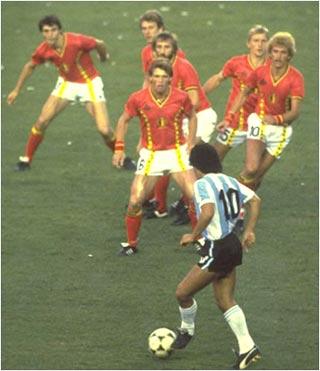
2) His one-man effort against Greece, culminating in the 92nd minute free kick, to get England to the 2002 World Cup remains the single greatest individual performance by a footballer I have ever seen. Including Maradona for Argentina. But that was the peak of his career.
3) He won’t just be there to pick up the paycheck like those hasbeen stars in the 70s – he’ll be surprisingly aggressive on the pitch.
4) He’s a lovely man and is precisely as articulate as George W Bush.
5) LA Galaxy are about to sell a hell of a lot of merchandise in Japan.
The 31-year-old former England captain will sign a five-year deal, reportedly worth £128m.
Not bad, eh? No longer wanted by England, no longer able to command a place in a top Spanish or English team, but still able to sign the most lucrative deal in football history and pick up $1 million a week. Possibly more, because apparently they’re also giving him a stake in the club. And his wife gets to hang about Hollywood looking for bit parts in second-rate movies.
I guess Americans are (briefly) now going to be hearing a lot of nonsense about the most famous sports player (everywhere else) in the world, so here’s the truth about him:
1) He’s no Pele. He was never a great footballer: he’s very good player with a unique speciality. Nonetheless he’ll stand out a mile in MLS.
2) His one-man effort against Greece, culminating in the 92nd minute free kick, to get England to the 2002 World Cup remains the single greatest individual performance by a footballer I have ever seen. Including Maradona for Argentina. But that was the peak of his career.
3) He won’t just be there to pick up the paycheck like those hasbeen stars in the 70s – he’ll be surprisingly aggressive on the pitch.
4) He’s a lovely man and is precisely as articulate as George W Bush.
5) LA Galaxy are about to sell a hell of a lot of merchandise in Japan.
Wednesday, January 10, 2007
My Kind of Blogging Day
Now that blogging is the world’s second favourite internet pastime, I believe it’s about time that the Sunday papers acknowledged as much by devoting a regular feature to it in the supplements. Given that all bloggers are in the A or B socio-economic groups, the glossy lifestyle magazines surely provide the ideal showcase.
To get the ball rolling I have taken the trouble of interviewing renowned blogger Donaghue Charlesworth of the popular OrganicCommunitiesAgainstTheWar.com site, for a pilot column.
My Kind of Blogging Day
With Donaghue Charlesworth

Rise and shine…
I’m generally awakened at 6am by the sound of tiny fountains and tinkling wind-chimes in a Japanese Zen garden, floating from my Bose Wave stereo alarm system. That isn’t just one of those tapes by the way – I actually went to Japan to record the sound of tiny fountains and wind-chimes in an authentic Zen garden. If there is one thing I value above all else, it is authenticity. If a girl is sharing the bed with me I’ll gently ease her aside, and while I go for an invigorating session with my Pilates instructor and an hour’s swim in the outdoor pool, she’ll prepare breakfast. If there are two girls, the other one will help.
Breakfast is usually 48 grammes of natural organic yak’s yoghurt, mixed with slices of starfruit and honey from my own hives, all washed down with a clear glass of fair-trade lemongrass tea. The starfuit is an essential source of anti-oxidants, so I have them imported direct from French Polynesia. Kiwi is also good, but I find it lacks the required pretension. I insist on being fully carbon-neutral, so to cancel out the air miles I’ll get one of the girls to plant a tree.
It’s off to work we go…
After breakfast, work on the blog begins in earnest. I work by writing in four minute bursts of activity interspersed with increasingly long jogs. So it will be write for four minutes, jog a mile, write for another four minutes, jog two miles, and so on until supper time. I never eat lunch.
My computer is of course a Mac – Gaia spare us from Microsoft! – but it is fully bespoke. It is powered by a mini wind-turbine on the lawn, and I had it made from 100% recycled cardboard by a specially-trained team of Romanian orphans. The orphans took it upon themselves to re-name their village after me in honour of the employment it brought them. I know some people would find the existence of a DonaghueCharlesworthberg flattering, but really it’s very humbling.
Silly as it sounds, I’ve never learned to type. I write all my blog posts out in longhand, using recycled papyrus and one of Jean-Jacques Rousseau’s original quills, which I bought in a Parisian auction. I find this is the only way my writing Chi can flow.
Donaghueina, my Phillippino assistant, will then type them up and post them to the site. No, that isn’t her given name! She took it upon herself to rename herself after myself. I know some people would find that flattering, but really it’s very humbling.
The Magic Hour
I stop working at the Magic Hour. If it’s a good day, there’ll be another lengthy session with my Pilates instructor. I say ‘instructor’. Perhaps ‘partner’ is more the word. I think by now I can teach her as much as she can teach me!
In many ways, we’re evolving beyond Pilates now. Pilates has become rather mainstream and talking about it at great length no longer has the same power to 'wow' people at dinner parties. Instead, we’ve been developing a brand new Pilates/Yoga/Kung Fu/Origami Fusion that really pushes the spiritual and physical envelopes. My partner insists we call it “Charlesworth-do”, which is very humbling.
When the soft night falls...
I live with members of my family, but I prefer to think of them as my ‘community’. We don’t have a television – I believe that TV destroys the art of talking about myself. In the evenings we’ll paint, sing, debate, make organic vegetable stews and discuss our various achievements. I am blessed with a community made up of wonderful listeners. It’s really very humbling. Every night I dream of death. Sweet, forgiving death.
And that’s My Kind of Blogging Day!
To get the ball rolling I have taken the trouble of interviewing renowned blogger Donaghue Charlesworth of the popular OrganicCommunitiesAgainstTheWar.com site, for a pilot column.
My Kind of Blogging Day
With Donaghue Charlesworth

Rise and shine…
I’m generally awakened at 6am by the sound of tiny fountains and tinkling wind-chimes in a Japanese Zen garden, floating from my Bose Wave stereo alarm system. That isn’t just one of those tapes by the way – I actually went to Japan to record the sound of tiny fountains and wind-chimes in an authentic Zen garden. If there is one thing I value above all else, it is authenticity. If a girl is sharing the bed with me I’ll gently ease her aside, and while I go for an invigorating session with my Pilates instructor and an hour’s swim in the outdoor pool, she’ll prepare breakfast. If there are two girls, the other one will help.
Breakfast is usually 48 grammes of natural organic yak’s yoghurt, mixed with slices of starfruit and honey from my own hives, all washed down with a clear glass of fair-trade lemongrass tea. The starfuit is an essential source of anti-oxidants, so I have them imported direct from French Polynesia. Kiwi is also good, but I find it lacks the required pretension. I insist on being fully carbon-neutral, so to cancel out the air miles I’ll get one of the girls to plant a tree.
It’s off to work we go…
After breakfast, work on the blog begins in earnest. I work by writing in four minute bursts of activity interspersed with increasingly long jogs. So it will be write for four minutes, jog a mile, write for another four minutes, jog two miles, and so on until supper time. I never eat lunch.
My computer is of course a Mac – Gaia spare us from Microsoft! – but it is fully bespoke. It is powered by a mini wind-turbine on the lawn, and I had it made from 100% recycled cardboard by a specially-trained team of Romanian orphans. The orphans took it upon themselves to re-name their village after me in honour of the employment it brought them. I know some people would find the existence of a DonaghueCharlesworthberg flattering, but really it’s very humbling.
Silly as it sounds, I’ve never learned to type. I write all my blog posts out in longhand, using recycled papyrus and one of Jean-Jacques Rousseau’s original quills, which I bought in a Parisian auction. I find this is the only way my writing Chi can flow.
Donaghueina, my Phillippino assistant, will then type them up and post them to the site. No, that isn’t her given name! She took it upon herself to rename herself after myself. I know some people would find that flattering, but really it’s very humbling.
The Magic Hour
I stop working at the Magic Hour. If it’s a good day, there’ll be another lengthy session with my Pilates instructor. I say ‘instructor’. Perhaps ‘partner’ is more the word. I think by now I can teach her as much as she can teach me!
In many ways, we’re evolving beyond Pilates now. Pilates has become rather mainstream and talking about it at great length no longer has the same power to 'wow' people at dinner parties. Instead, we’ve been developing a brand new Pilates/Yoga/Kung Fu/Origami Fusion that really pushes the spiritual and physical envelopes. My partner insists we call it “Charlesworth-do”, which is very humbling.
When the soft night falls...
I live with members of my family, but I prefer to think of them as my ‘community’. We don’t have a television – I believe that TV destroys the art of talking about myself. In the evenings we’ll paint, sing, debate, make organic vegetable stews and discuss our various achievements. I am blessed with a community made up of wonderful listeners. It’s really very humbling. Every night I dream of death. Sweet, forgiving death.
And that’s My Kind of Blogging Day!
Be careful what you wish for, Harold
Pinter demands war crimes trial for Blair
"How many people do you have to kill before you qualify to be described as a mass murderer and a war criminal? One hundred thousand? More than enough, I would have thought," [Harold Pinter] said.
"Therefore it is just that Bush and Blair be arraigned before the international criminal court of justice. But Bush has been clever. He has not ratified the international criminal court of justice ...
"But Tony Blair has ratified the court and is therefore available for prosecution. We can let the court have his address if they're interested: it is Number 10, Downing Street, London."
Predicting the future is a mug’s game, but I’ll be that mug and predict that the most damaging legacy of the protracted and media-saturating violent aftermath of the Iraq invasion will be the return of to the Anglosphere of Realpolitik in international affairs.
Given the unpopularity of the Iraq invasion and the relentless ferocity of the pounding they’ve received from the Left and the mainsteam media, few politicians following Bush and Blair will want to risk putting ideals and principles of liberal democracy at the forefront of foreign policy.
So we can look forward to plenty of blind eye-turning and two-faced cosying up to exactly the kind of regime to which Amnesty International demands we write cross letters.
Or as most American bloggers might put it: move over Churchill, Chamberlain’s back in town.
Of course, the anti-American Left damns you if you do and damns you if you don’t, so they will be equally critical of Realpolitik. “Saddam was America’s creature!” they cried. But every issue is always easy when all you have to do is criticise and never have to act, which is why it is impossible to take the anti-American left seriously.
"How many people do you have to kill before you qualify to be described as a mass murderer and a war criminal? One hundred thousand? More than enough, I would have thought," [Harold Pinter] said.
"Therefore it is just that Bush and Blair be arraigned before the international criminal court of justice. But Bush has been clever. He has not ratified the international criminal court of justice ...
"But Tony Blair has ratified the court and is therefore available for prosecution. We can let the court have his address if they're interested: it is Number 10, Downing Street, London."
Predicting the future is a mug’s game, but I’ll be that mug and predict that the most damaging legacy of the protracted and media-saturating violent aftermath of the Iraq invasion will be the return of to the Anglosphere of Realpolitik in international affairs.
Given the unpopularity of the Iraq invasion and the relentless ferocity of the pounding they’ve received from the Left and the mainsteam media, few politicians following Bush and Blair will want to risk putting ideals and principles of liberal democracy at the forefront of foreign policy.
So we can look forward to plenty of blind eye-turning and two-faced cosying up to exactly the kind of regime to which Amnesty International demands we write cross letters.
Or as most American bloggers might put it: move over Churchill, Chamberlain’s back in town.
Of course, the anti-American Left damns you if you do and damns you if you don’t, so they will be equally critical of Realpolitik. “Saddam was America’s creature!” they cried. But every issue is always easy when all you have to do is criticise and never have to act, which is why it is impossible to take the anti-American left seriously.
Tuesday, January 09, 2007
Genius
Charles Dickens is guilty of several literary crimes, principally mawkish sentimentality and over-use of the plot device of improbable coincidence, but you can forgive a man anything who can drop in an incidental description like this (from David Copperfield):
She had a cousin in the Life Guards, with such long legs that he looked like the afternoon shadow of somebody else.
She had a cousin in the Life Guards, with such long legs that he looked like the afternoon shadow of somebody else.
Subscribe to:
Posts (Atom)